Intuit / QuickBooks Time / Case study
Making tasks less of a chore.
Making task-based project estimates discoverable, understandable and dramatically easier for small-business owners to create.
- My role
- Lead product designer
- Scope
- Interaction design · UX research · Content design
- Timeline
- 3 months for the admin estimation experience
- 13% → 40%
- Project estimation rate
- 10% → 50%
- Task-based share of all estimates
- 15 → 5
- Steps to add an estimated task
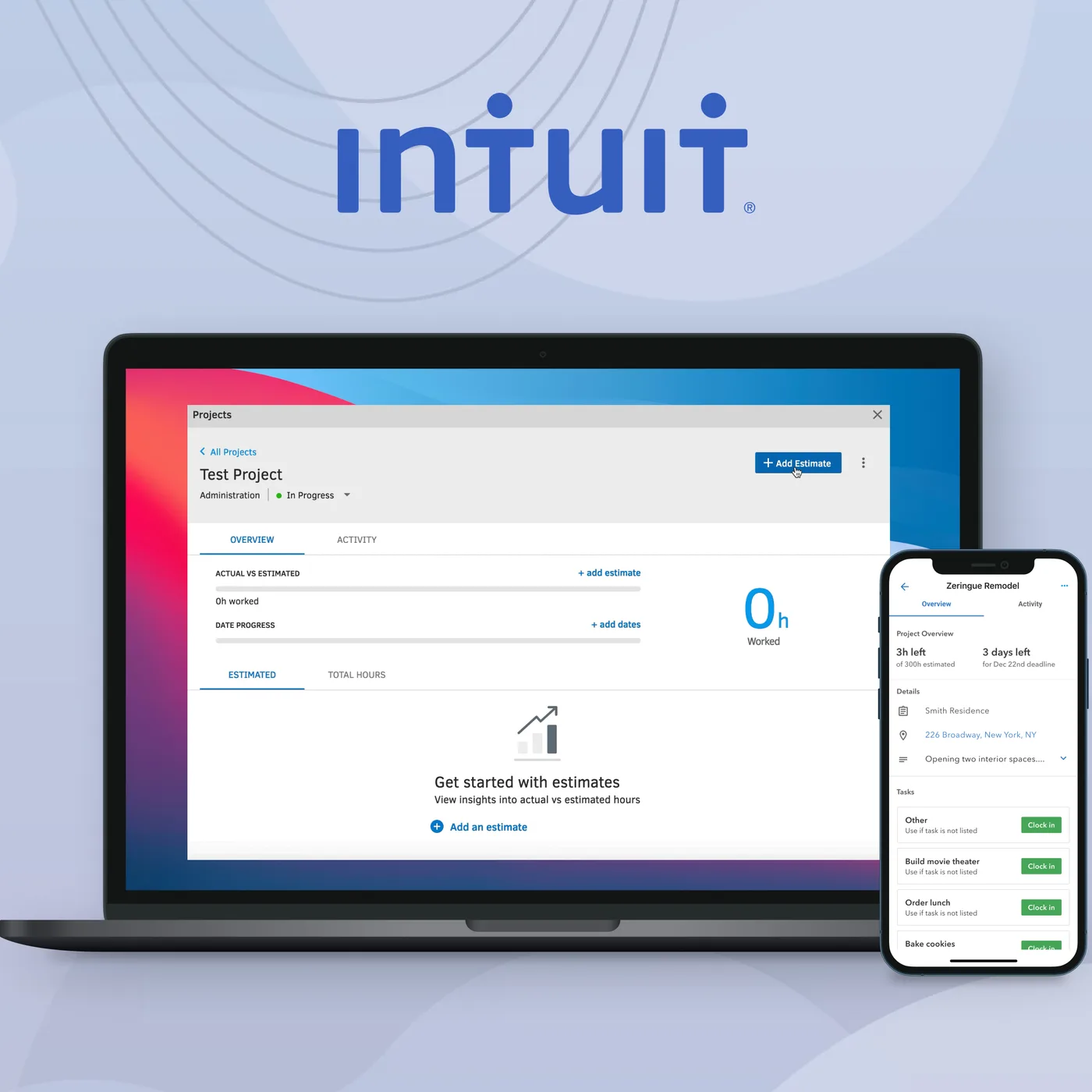
A requested feature hiding in plain sight.
Owners and managers needed to compare estimated labor with actual hours before projects went over budget. Yet customers kept asking for task-based estimates—a feature the product technically already had.
Adding an estimated task took 15 steps across four areas of the product, plus enabling a feature buried in beta settings. On mobile, the project detail view didn’t expose tasks, and the language didn’t connect the new Projects experience to existing jobs and custom fields.
Research the gap between available and usable.
I led product design with eight engineers, a PM and a part-time UX researcher, coordinating with two other teams in the workforce-management initiative.
Customer interviews, low estimation rates and a team experience audit pointed to the same problem: discoverability, content and interaction design. I reviewed comparable task-creation experiences, sketched and iterated on prototypes, and aligned the team around technical constraints.
Use evidence to resolve the details.
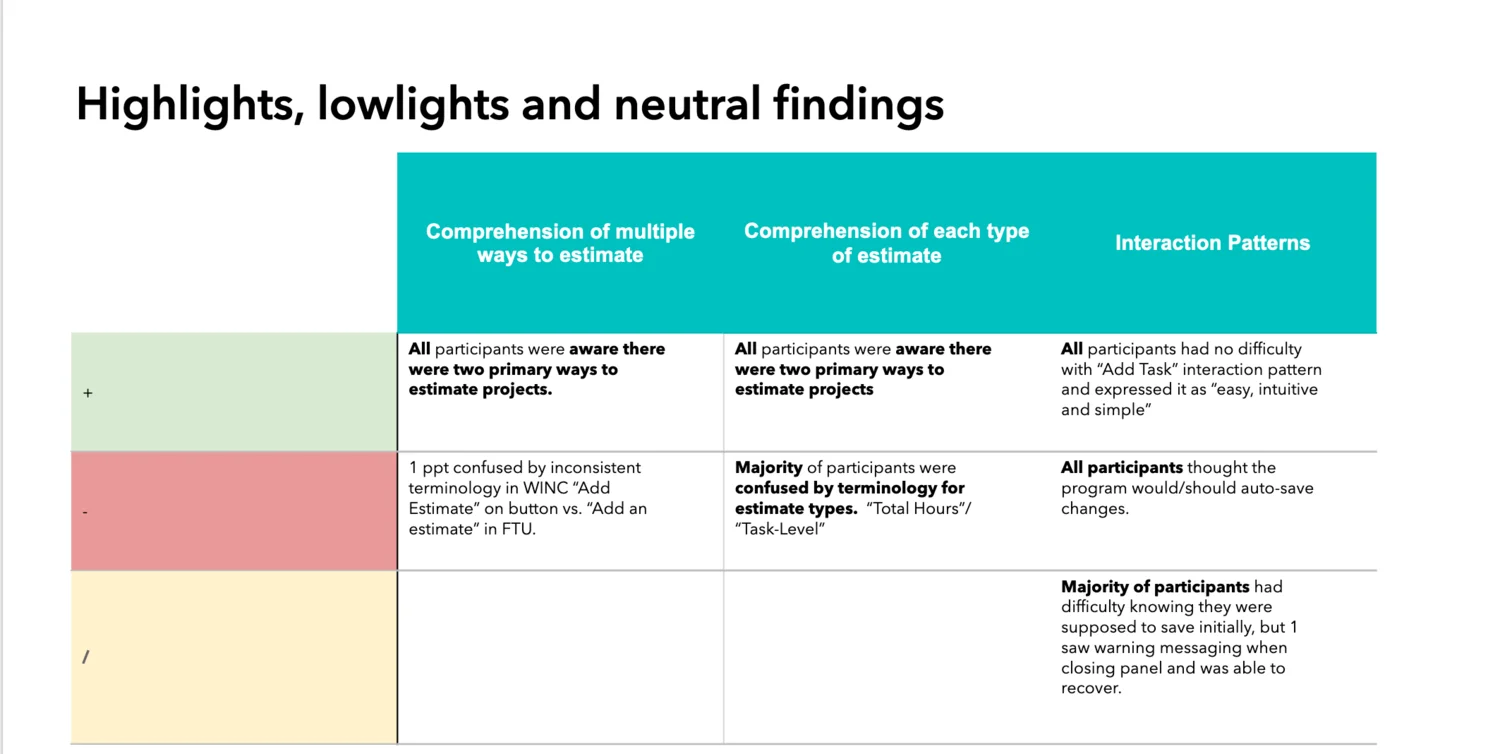
I designed and ran a three-task usability test on UserTesting. Findings helped us resolve disagreements about copy and interaction patterns using customer language, observed behavior and root-cause analysis.
One important discovery was uncertainty about whether changes would save automatically. The backend did not support autosave, so the design needed explicit save behavior and messaging to prevent accidental loss of work.
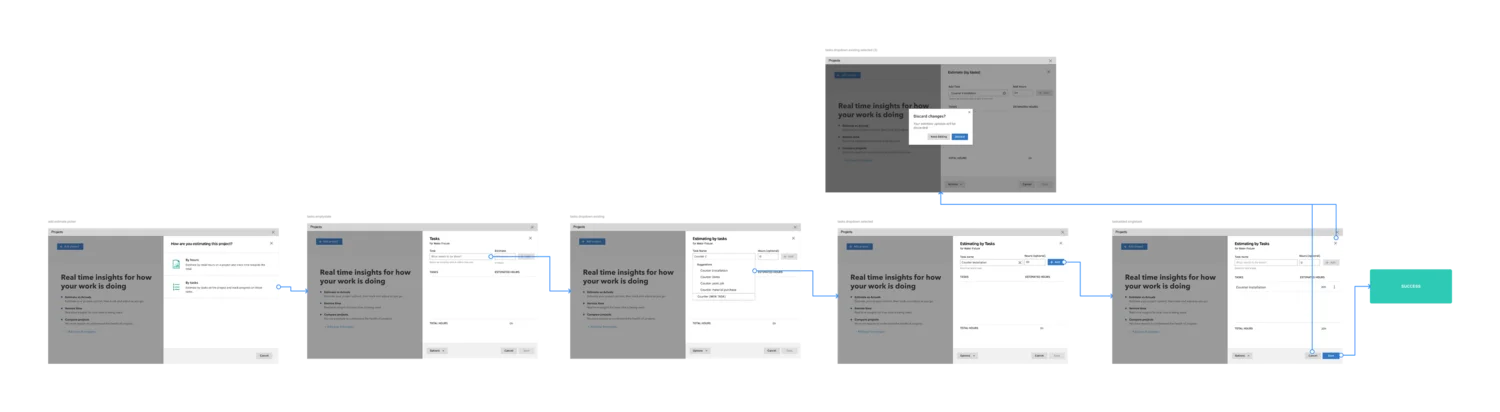
Put the whole task in one place.
The new experience let admins add, update and remove tasks in one space, with a clear choice between total-hour estimates and estimates by task. The task-add flow dropped from 15 steps to five.
Project estimation rates increased from 13% to 40%. Within those estimates, the task-based share increased from 10% to 50%, alongside fewer task-estimation complaints and requests.
What I would carry forward.
Bring content-design expertise into the work earlier. Agree on a clear decision-making model when joining a team. Understand ecosystem integrations and data flow before getting deep into interactions.
The original next-step priorities were custom-field compatibility, task status and assigning tasks to employees. Those were proposed follow-ups, not outcomes claimed for this release.